
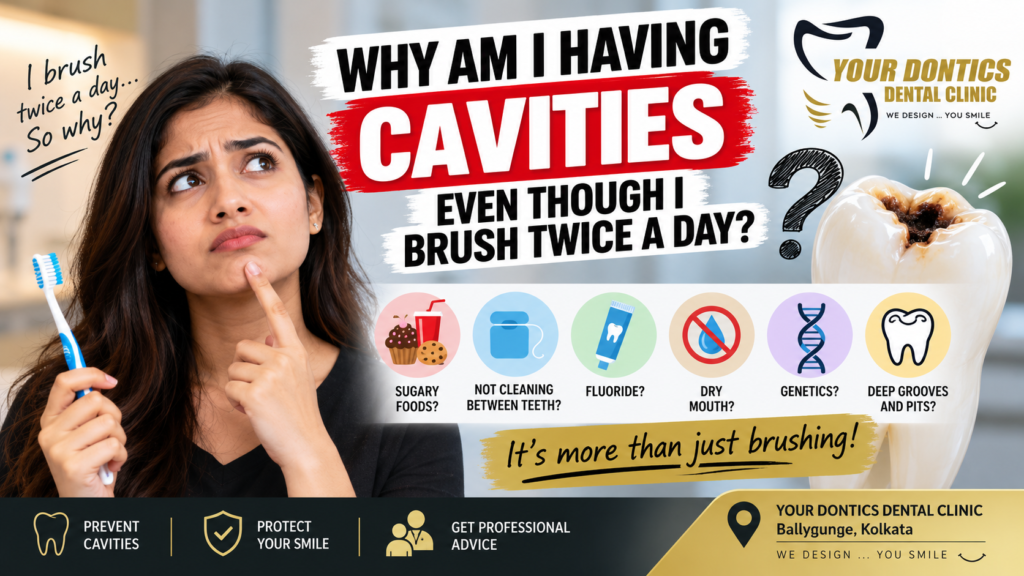
“I brush my teeth twice every day, so why am I still getting cavities?”
This is one of the most common questions patients ask their dentist. Brushing twice a day is an important part of maintaining good oral hygiene, but brushing alone does not completely eliminate the risk of dental cavities.
Dental cavities, also known as tooth decay or dental caries, are influenced by several factors including your diet, oral bacteria, saliva, fluoride exposure, cleaning between your teeth, and how often you consume sugary or carbohydrate-rich foods.
If you are regularly developing cavities despite brushing twice daily, understanding the reason behind it can help you protect your teeth more effectively.
At YOUR DONTICS DENTAL CLINIC, Ballygunge, Kolkata, we believe that preventing cavities starts with understanding what is actually causing them.
What Causes Cavities?
A cavity develops when acids produced by bacteria in dental plaque gradually damage the tooth enamel.
When you eat foods containing sugars and fermentable carbohydrates, bacteria in plaque can produce acids. These acids lower the pH around the teeth and contribute to enamel demineralization. Over time, repeated acid attacks can lead to tooth decay and eventually a cavity. ([ADA][1])
This means that cavities are not simply caused by not brushing your teeth. They are the result of multiple factors working together.
1. You May Be Eating Sugar More Frequently Than You Realize
One of the biggest reasons people develop cavities despite brushing regularly is frequent sugar consumption.
It isn’t only sweets and chocolates that matter. Sugar can also be present in:
- Soft drinks and packaged beverages
- Sweetened tea or coffee
- Biscuits and cookies
- Cakes and pastries
- Chocolates
- Candy
- Sweetened breakfast cereals
- Packaged fruit juices
- Frequent snacks between meals
The frequency of sugar exposure is particularly important. Repeatedly eating or drinking sugary foods throughout the day gives the bacteria in plaque more opportunities to produce acids that attack your teeth. ([ADA][1])
So, even if you brush twice a day, frequent snacking can continue to increase your cavity risk.
What can you do?
Try to keep sugary foods and drinks to mealtimes rather than continuously snacking throughout the day. Choose water between meals whenever possible.
2. You May Not Be Cleaning Between Your Teeth
Your toothbrush cannot effectively clean every surface between your teeth.
Food particles and plaque can accumulate in these areas, allowing bacteria to remain undisturbed.
This is why daily interdental cleaning, such as flossing or using an appropriate interdental brush, is an important part of cavity prevention. The American Dental Association recommends brushing twice daily with fluoride toothpaste and cleaning between the teeth daily. ([ADA][2])
If your cavities frequently occur between your teeth, your dentist may recommend improving your interdental cleaning technique.
3. Are You Using Fluoride Toothpaste?
Brushing twice daily is beneficial, but the type of toothpaste you use also matters.
The American Dental Association recommends brushing twice a day for two minutes with fluoride toothpaste as part of cavity prevention. ([ADA][3])
Fluoride helps strengthen teeth and supports the remineralization process, making enamel more resistant to acid attacks.
If you are getting cavities repeatedly, speak with your dentist about whether your current toothpaste and fluoride exposure are appropriate for your individual cavity risk.
4. You May Be Brushing Correctly — But Not Effectively
Simply brushing twice a day does not guarantee that every area of your mouth is being cleaned properly.
Common mistakes include:
- Brushing for less than two minutes
- Using an incorrect brushing technique
- Missing the back teeth
- Not cleaning along the gumline
- Brushing too aggressively
- Not replacing a worn toothbrush
- Rinsing immediately after brushing in a way that removes fluoride
Your dentist can show you a personalised brushing technique based on your teeth, gums and oral health.
5. Dry Mouth Can Increase Your Cavity Risk
Saliva plays an important protective role in your mouth.
When saliva production is reduced, your mouth loses some of its natural ability to buffer acids and protect the teeth. Dry mouth can therefore increase the risk of dental caries. ([ADA][4])
Dry mouth can have several possible causes, including certain medications and medical conditions.
If you frequently experience:
- A dry or sticky feeling in your mouth
- Difficulty swallowing dry foods
- Frequent thirst
- Dry lips
- A burning sensation in your mouth
- Recurrent cavities
it is worth discussing this with your dentist.
6. Your Teeth May Have Deep Grooves and Pits
Some people naturally have deeper grooves and pits on the chewing surfaces of their back teeth.
These areas can be difficult to clean because toothbrush bristles may not reach all the way into the grooves.
As a result, plaque and food particles can remain trapped and increase the risk of decay.
During a dental examination, your dentist can identify areas that may require extra preventive care.
7. Genetics and Tooth Structure Can Play a Role
Not everyone’s teeth are exactly the same.
Differences in enamel structure, tooth shape, saliva and other individual factors can influence susceptibility to cavities.
This is one reason why two people with apparently similar brushing habits can have very different cavity experiences.
If you repeatedly develop cavities, your dentist can perform a caries risk assessment to identify the factors that may be increasing your individual risk. ([ADA][2])
8. You May Already Have Early Tooth Decay
Sometimes tooth decay begins before you notice pain.
Early caries may appear as changes in the enamel rather than an obvious hole in the tooth. If these changes are detected early, preventive measures may sometimes help stop or slow the progression before extensive tooth damage occurs. ([ADA][2])
This is why regular dental check-ups are important even when your teeth do not hurt.
No toothache does not always mean no dental problem.
9. Acidic Foods and Drinks Can Affect Your Teeth
Regular consumption of acidic beverages and foods can contribute to enamel erosion and create an environment that is less favourable for maintaining healthy tooth structure.
Common examples include:
- Soft drinks
- Energy drinks
- Some fruit juices
- Frequent acidic beverages
If you consume these regularly, discuss your habits with your dentist and ask how you can reduce their impact on your teeth.
So, Is Brushing Twice a Day Enough?
Brushing twice daily is essential — but it is only one part of cavity prevention.
A comprehensive oral-care routine should include:
✓ Brush twice daily with fluoride toothpaste
✓ Clean between your teeth every day
✓ Reduce frequent sugary snacks and drinks
✓ Drink plenty of water
✓ Pay attention to signs of dry mouth
✓ Have regular dental check-ups
✓ Treat early signs of tooth decay promptly
✓ Follow personalised preventive advice from your dentist
The ADA recommends twice-daily brushing with fluoride toothpaste and daily cleaning between teeth as part of good home oral care. ([ADA][3])
When Should You Visit a Dentist for a Cavity?
You should schedule a dental examination if you notice:
- Tooth sensitivity to hot, cold or sweet foods
- A visible dark spot or hole in a tooth
- Food repeatedly getting stuck in one area
- Toothache
- Pain while biting
- Bad breath that persists despite good oral hygiene
- A history of frequent cavities
A dentist can examine your teeth and determine whether you have active decay, early enamel changes, or another dental problem.
Depending on the condition of the tooth, treatment may range from preventive care and fluoride-based measures to a tooth-coloured filling, root canal treatment, or another appropriate procedure.
Looking for a Dentist in Ballygunge, Kolkata?
If you are searching for a *dentist in Ballygunge, **dental clinic in Ballygunge, or *cavity treatment in Kolkata, YOUR DONTICS DENTAL CLINIC provides comprehensive dental care with a focus on preventive dentistry, comfortable treatment and modern dental care.
Your Dontics Dental Clinic – Best Dental Clinic in Ballygunge is located at 60, Hazra Road, opposite Bank of Baroda, Dover Terrace, Ballygunge, Kolkata – 700019.
Whether you need a routine dental check-up, cavity treatment, tooth-coloured filling, teeth cleaning, root canal treatment, dental implants, teeth whitening or other dental services, an examination can help identify problems early and protect your natural teeth.
Book Your Dental Consultation
YOUR DONTICS DENTAL CLINIC
📍 60, Hazra Road, Opp. Bank of Baroda, Dover Terrace, Ballygunge, Kolkata – 700019
📞 09330599331
Google Maps: Get Directions to Your Dontics Dental Clinic
If you have been wondering, “Why am I getting cavities even though I brush twice a day?”, don’t ignore recurring tooth decay. The reason may not be your brushing alone. A professional dental examination can help identify your individual risk factors and create a personalised plan for healthier teeth.
YOUR DONTICS DENTAL CLINIC — Your trusted dental clinic in Ballygunge, Kolkata, for preventive, restorative and comprehensive dental care.