
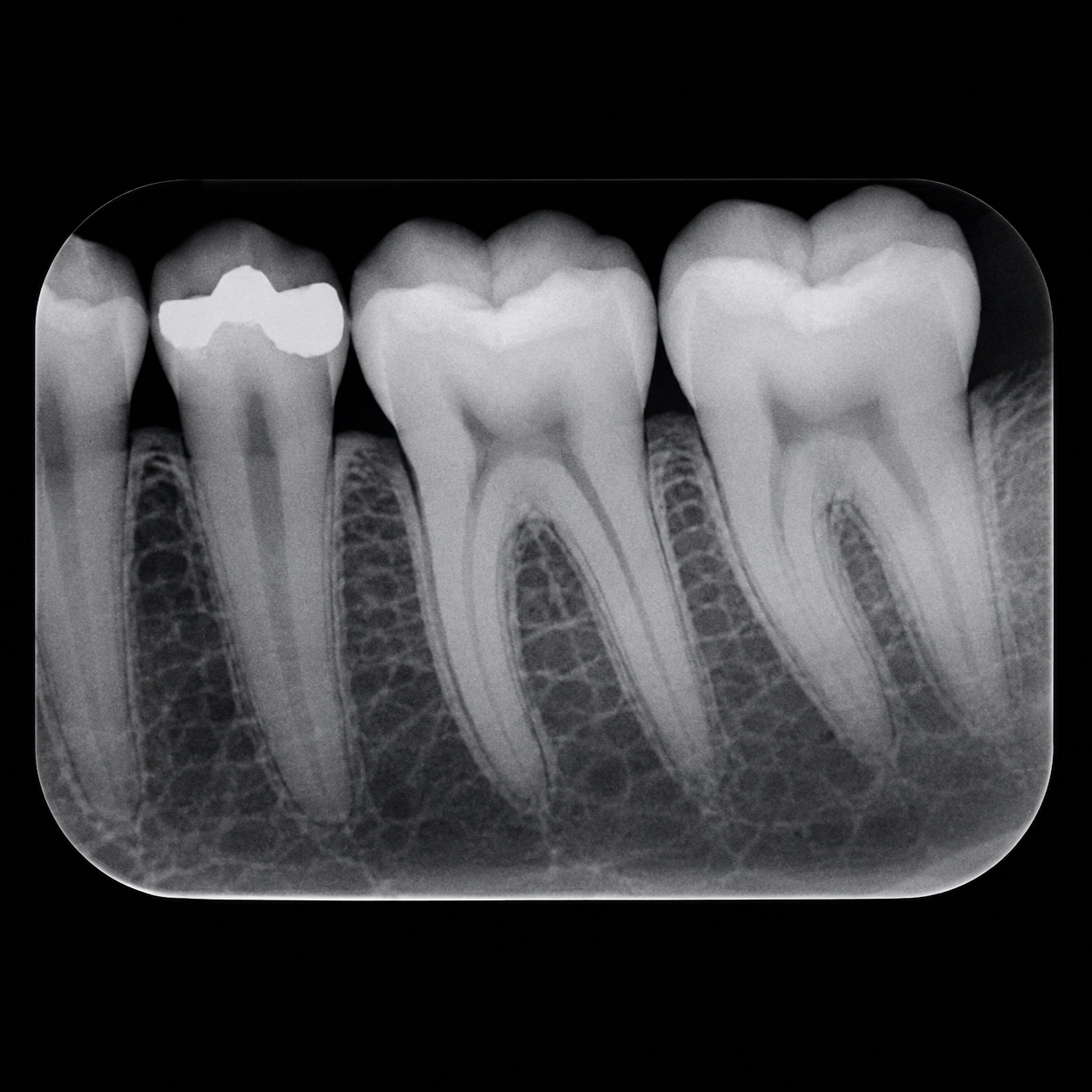
What Dental X-Rays Help Detect
- Cavities between teeth or below existing fillings, not visible to the eye
- Infections or abscesses at the root of a tooth
- Bone loss caused by gum disease
- Impacted teeth, including wisdom teeth
- Cysts or other abnormalities in the jaw
- The position and condition of tooth roots before treatments like root canals or extractions
When an IOPA X-Ray Is Used
- Diagnosing the cause of tooth pain
- Planning a root canal treatment
- Checking healing after a procedure
- Assessing a tooth before extraction
- Investigating swelling or infection near a specific tooth
What Happens During the X-Ray
- Positioning – a small sensor or film is placed inside your mouth near the tooth being examined
- Capturing the image – the X-ray is taken in seconds, with a lead apron used for added protection
- Immediate review – digital X-rays can be viewed right away, letting the doctor explain findings during your visit
Why This Matters
Many dental problems – infections, bone loss, hidden cavities – aren’t visible or painful in their early stages. An X-ray often reveals issues before they cause symptoms, allowing for simpler, less invasive treatment.
Who This Is For
- Patients experiencing unexplained tooth or jaw pain
- Anyone being evaluated for a root canal, extraction, or implant
- Patients due for a routine checkup, where X-rays are often taken periodically to monitor changes
- Anyone with swelling or suspected infection near a tooth
Book Your Appointment
If the doctor has recommended an X-ray, or you’re experiencing symptoms that need a closer look, call, WhatsApp, or book online.ne for a consultation with the doctor.tor will help you map out the right plan.’re experiencing symptoms that suggest you might, call, WhatsApp, or book online for an evaluation.