
Signs You May Need Wisdom Tooth Treatment
- Pain or tenderness at the back of the jaw
- Swelling or redness around the gums near the back molars
- Difficulty opening your mouth fully
- Bad breath or an unpleasant taste, often from trapped food or infection
- Crowding or shifting of nearby teeth
- Jaw stiffness or headaches near the back of the jaw
What Happens During Treatment
- Examination & X-ray – assessing the position of the wisdom tooth and its impact on surrounding teeth and bone
- Treatment planning – deciding whether monitoring, treatment, or extraction is the right approach
- Local anaesthesia – the area is fully numbed before any procedure
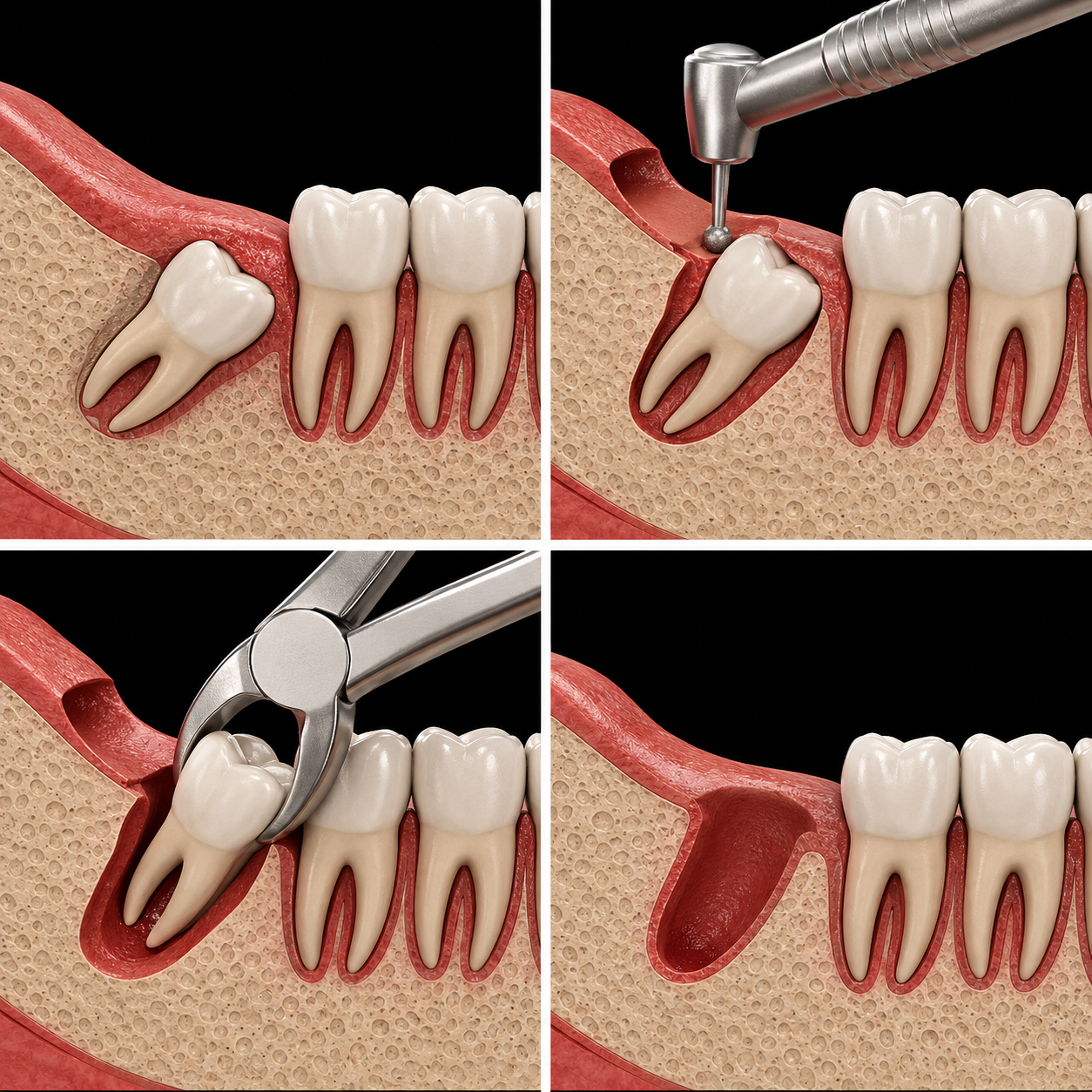
- Extraction – the tooth is carefully removed, with technique depending on whether it’s impacted or fully emerged
- Aftercare guidance – clear instructions on managing swelling, discomfort, and healing over the following days
Why Wisdom Teeth Are Often Removed
- Impaction — the tooth is trapped under the gum or bone and can’t emerge properly
- Lack of space – the jaw doesn’t have enough room, causing crowding or pressure on nearby teeth
- Recurring infection – partially emerged teeth can trap bacteria and cause repeated gum infections
- Cyst formation – impacted teeth can occasionally lead to cysts affecting the jawbone
Who This Is For
- Patients experiencing pain, swelling, or discomfort at the back of the jaw
- Anyone whose dentist has flagged impacted or problematic wisdom teeth on an X-ray
- Patients preparing for orthodontic treatment where wisdom teeth may interfere with results
Book Your Wisdom Tooth Consultation
Don’t let wisdom tooth pain linger. Call, WhatsApp, or book online for an evaluation. it can impact your bite and jawbone health over time. Call, WhatsApp, or book online to discuss whether an implant is right for you. a time that works for you.